
Blog
TEDxDetroit 2026 review and recap
Eighteen events in, TEDxDetroit still finds ways to surprise me.
On November 4, 2026, we gathered at Marygrove Conservancy in Detroit for an afternoon of ideas, music, magic, laughter, and some very real human moments. I left thinking about the people who took the stage and the people who filled the seats. Both gave us something to carry forward.
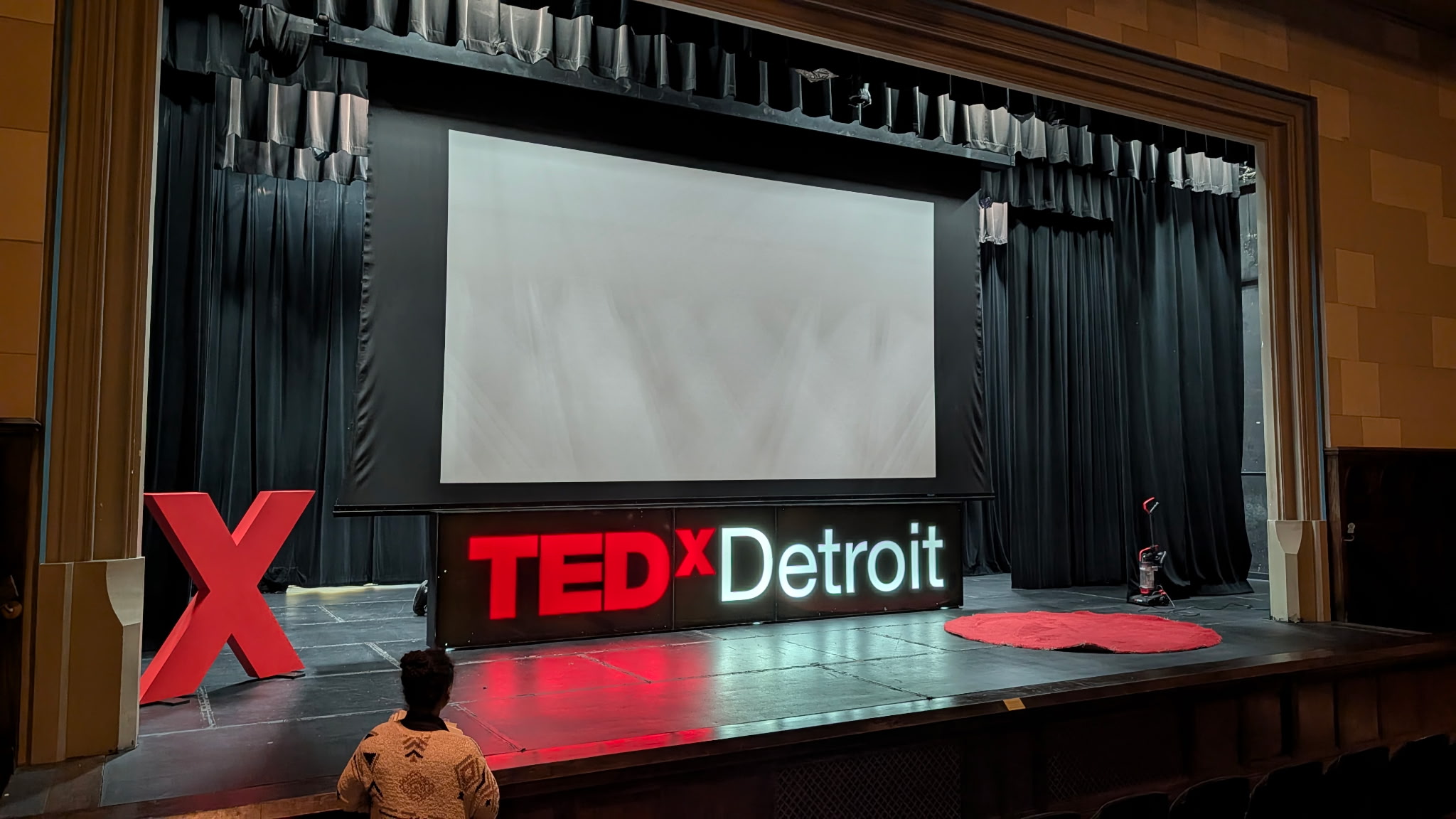
First, that venue. Absolutely stunning. Marygrove is one of the most naturally TEDx-esque theaters we’ve called home, arguably since the DIA Theater in 2010. It felt right for this gathering. And the staff made the experience even better: attentive, gracious, and helpful in every interaction. A beautiful room is one thing. The people taking care of it make a difference.
A big hat tip, too, to our friends at Absopure for supplying the water and our friends at Fairmount Community Center for getting it to us. Those contributions help make the day happen, and we appreciate both of you.

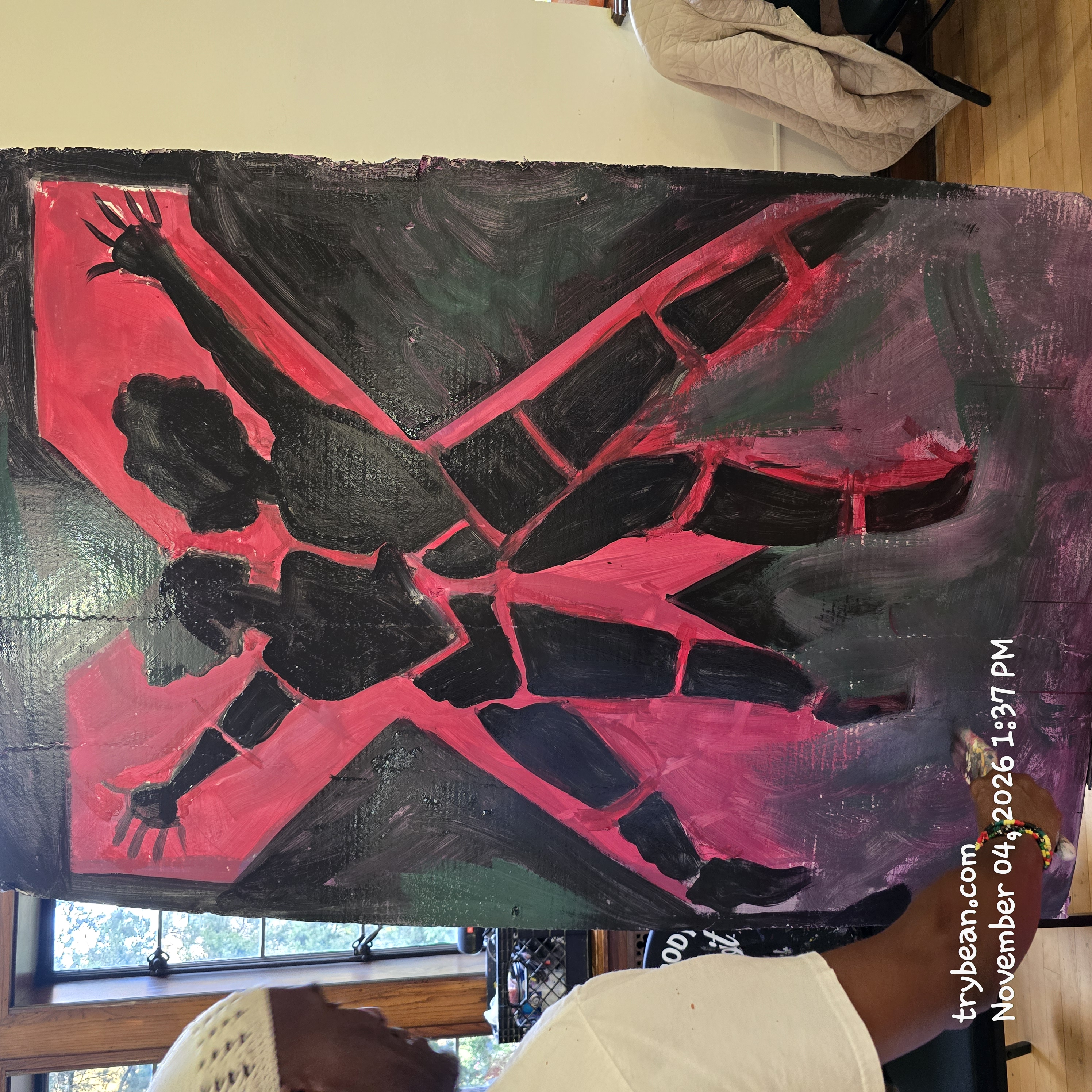
And while all of this was coming together, Chazz was creating something of his own: that incredible X painting. What you see in the photo took him less than 90 minutes, and he wasn’t quite finished yet.
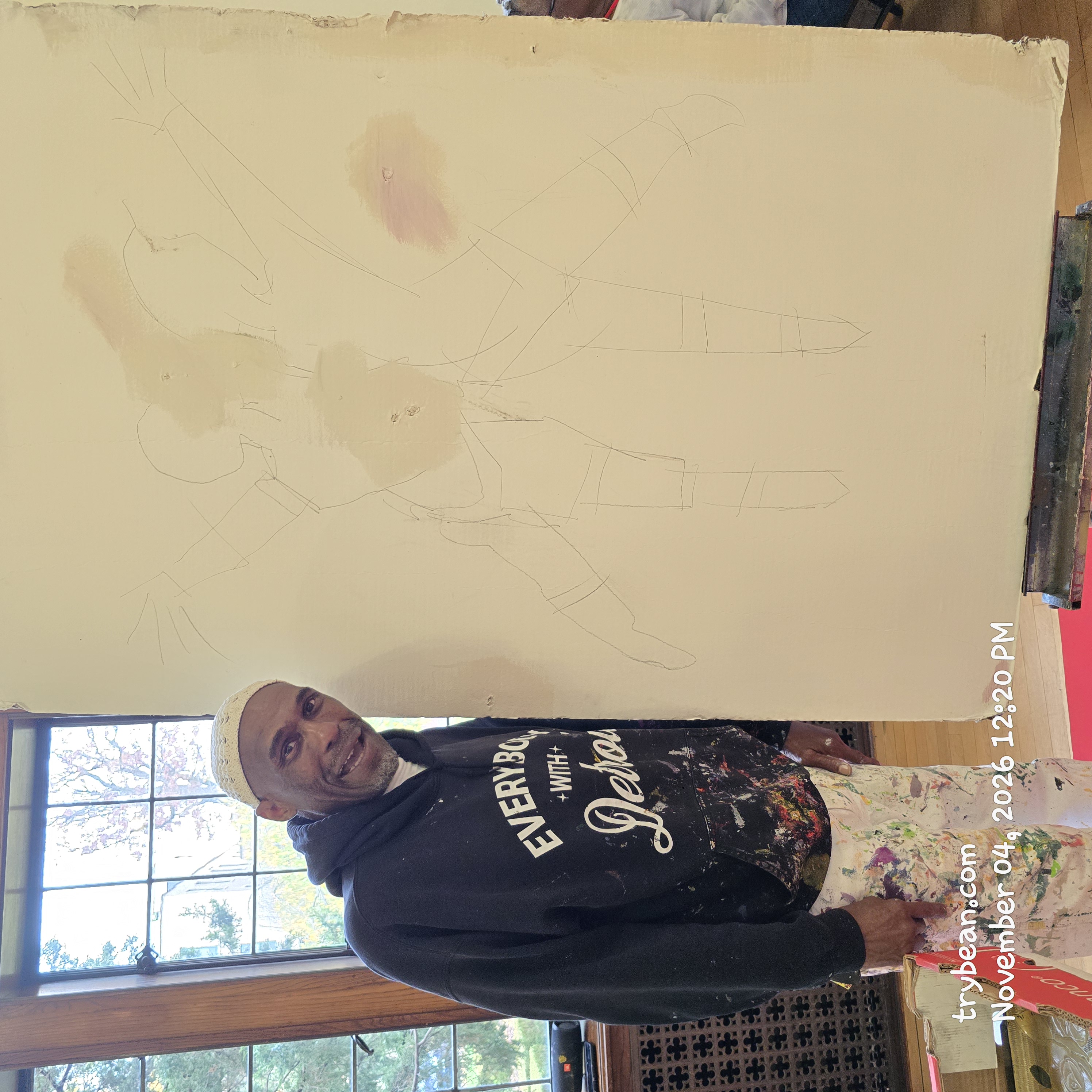
Chazz has been part of this story since the beginning. He spoke at the very first TEDxDetroit and made our first batch of TEDxDetroit manifesto shirts. His connection to TEDxDetroit goes all the way back to the first event.
Then the lights went down.
Kisma Jordan opened with a dark stage, a blank screen, and a voice that I’m pretty sure belongs in heaven with the angels.
The message I took from her song was simple: don’t stop fighting. Keep going. Stay resilient. Find your grit. Do the things you know you need to do, even when they’re hard.
What a voice. What a way to begin.
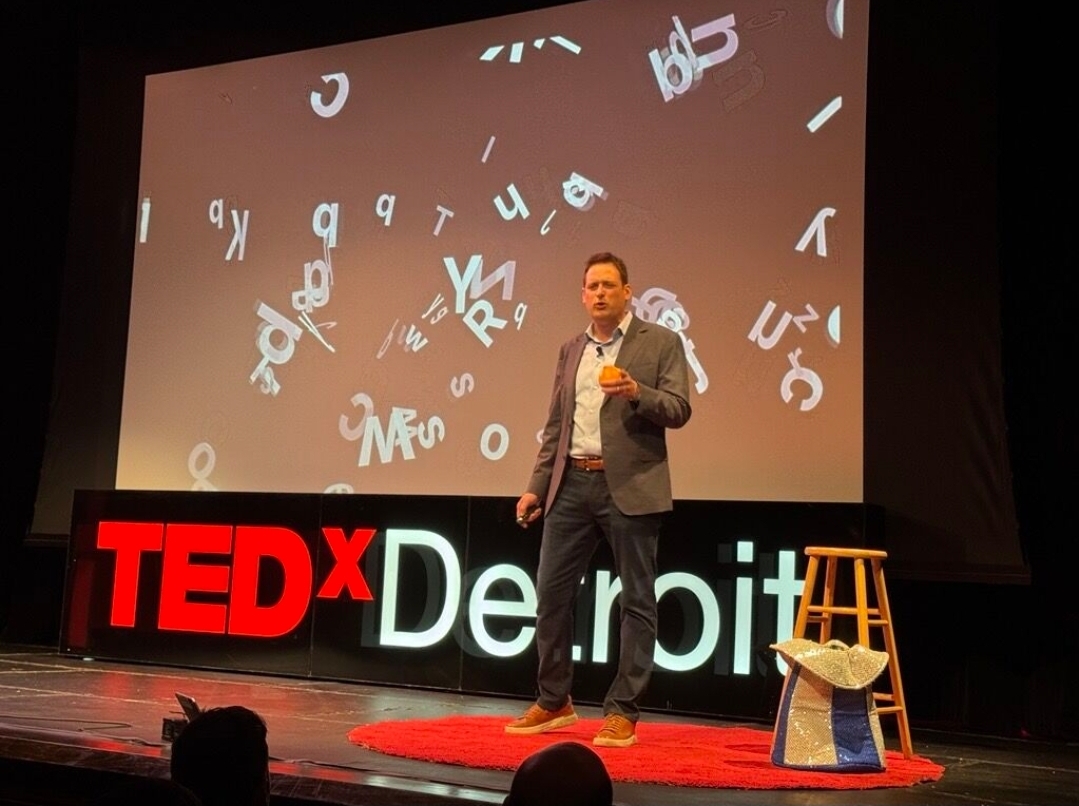
Todd Loiselle followed with an idea I loved: maybe the people we’ve labeled as behind are actually early.
Todd shared his experience growing up with learning differences, including ADHD and dyslexia, and being placed in special education in first grade. He also paid a beautiful tribute to a teacher who helped him find another way to learn by engaging all his senses.
Today, he’s the chief information officer at National Food Group. His story challenges how we recognize intelligence and what we do with people whose minds work differently. In a world where information is so readily available, the ability to think, connect, and figure things out deserves a whole lot more credit.
That first-grade teacher helped open a path. Look where it led.
Professor Tim Bates asked us to think about who really owns the AI we’re using.
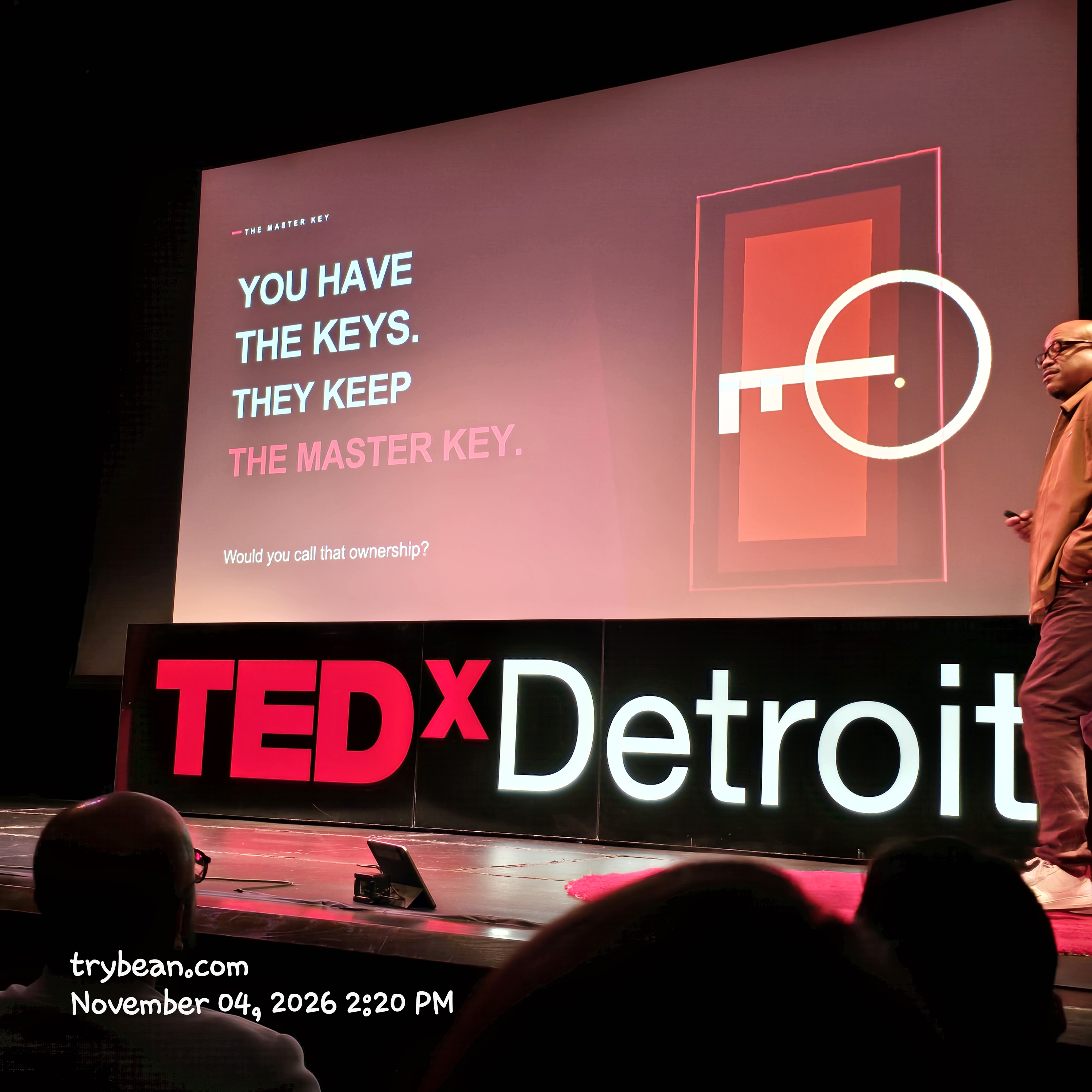
His analogy stuck with me: if you bought a house and somebody else kept the master key, how much ownership would you feel?
He shared a story about discovering the unexpected cost of moving his AI work and challenged us to look more closely at the terms we accept and the control we give away. He also made the case for open-source tools and smaller devices that can put more of that control into our own hands.
As someone who spends plenty of time working with AI, I left with some things to think about.
Then came Anthony Grupido, our magic man.
I don’t know how this dude does it. A woman selected the five of clubs from a deck of cards, and his little wind-up rabbit somehow landed on the five of clubs. He made it look so easy. The rest of us were left trying to figure out what we’d just seen.
But the rabbit had another job: helping Anthony talk about the value of a guide. Sometimes we need someone we can ask for help, someone who can help us get where we need to go.
Pretty sweet message from a little wind-up rabbit.
Julie Barnes Maurer cartwheeled onto the stage. That should tell you something about Julie.
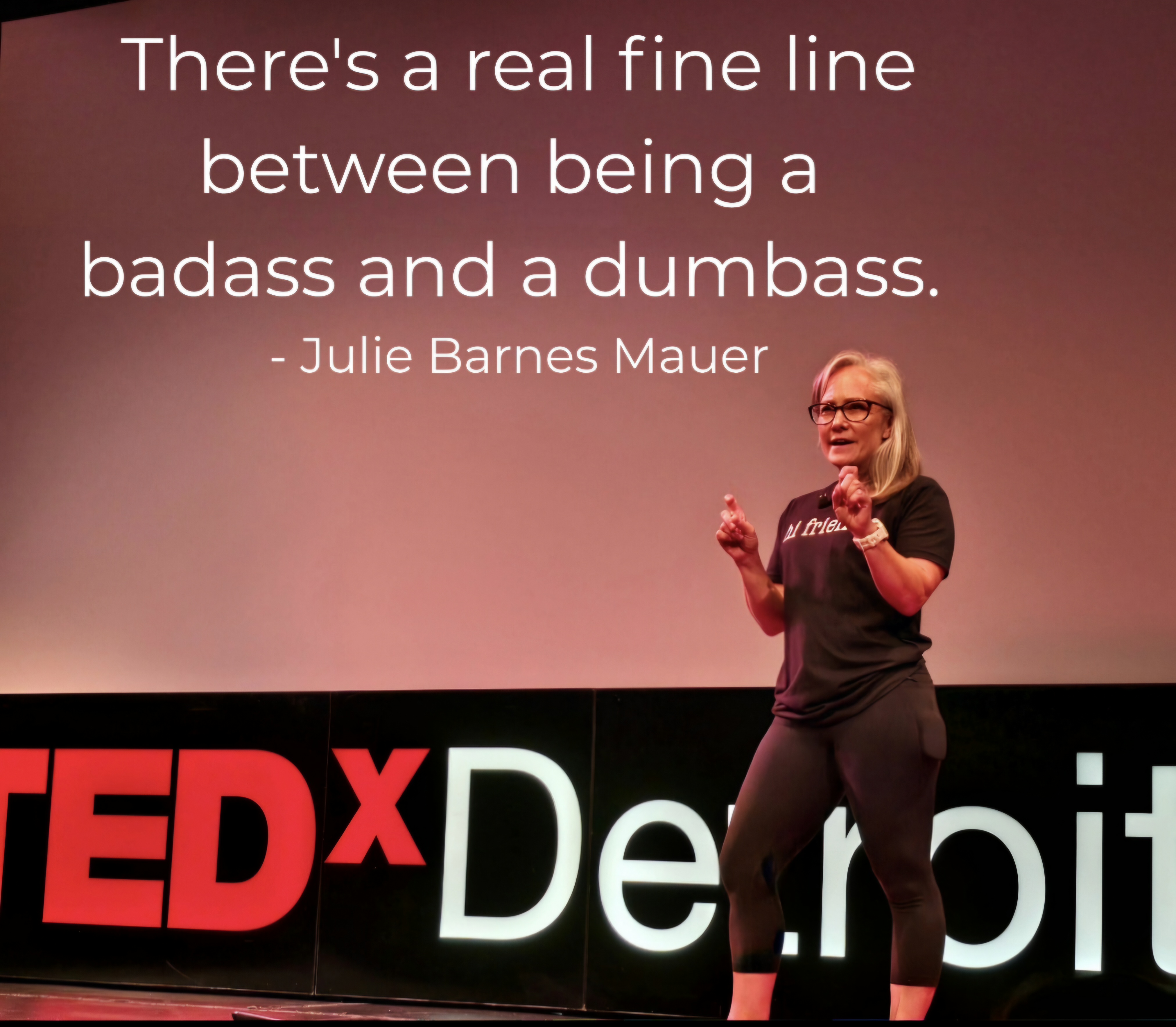
She shared how a 30-day running challenge became a streak lasting more than 2,000 days. Some days meant a mile. Others meant 100. Somewhere along the way, the streak became part of her identity. Then a serious health crisis landed her in the hospital and forced a reset.
What happens when the thing you’re proud of becomes something you can’t let yourself stop doing? And who are you when you have to stop?
Julie gave us plenty to consider, along with my pick for the line of the day:
“There’s a very fine line between being a badass and being a dumbass.”
Yes, I made that into a meme that night.
Mick Harrison Brege brought a little friend named GoodGood, an animatronic character with moving eyes, a wave, and enough personality to steal a room.
Mick had been developing GoodGood when tariffs disrupted access to the parts he needed. The project stalled. For a while, that seemed to be as far as it would go.
But about six months later, he was missing GoodGood. So he started figuring out how to manufacture the pieces himself.
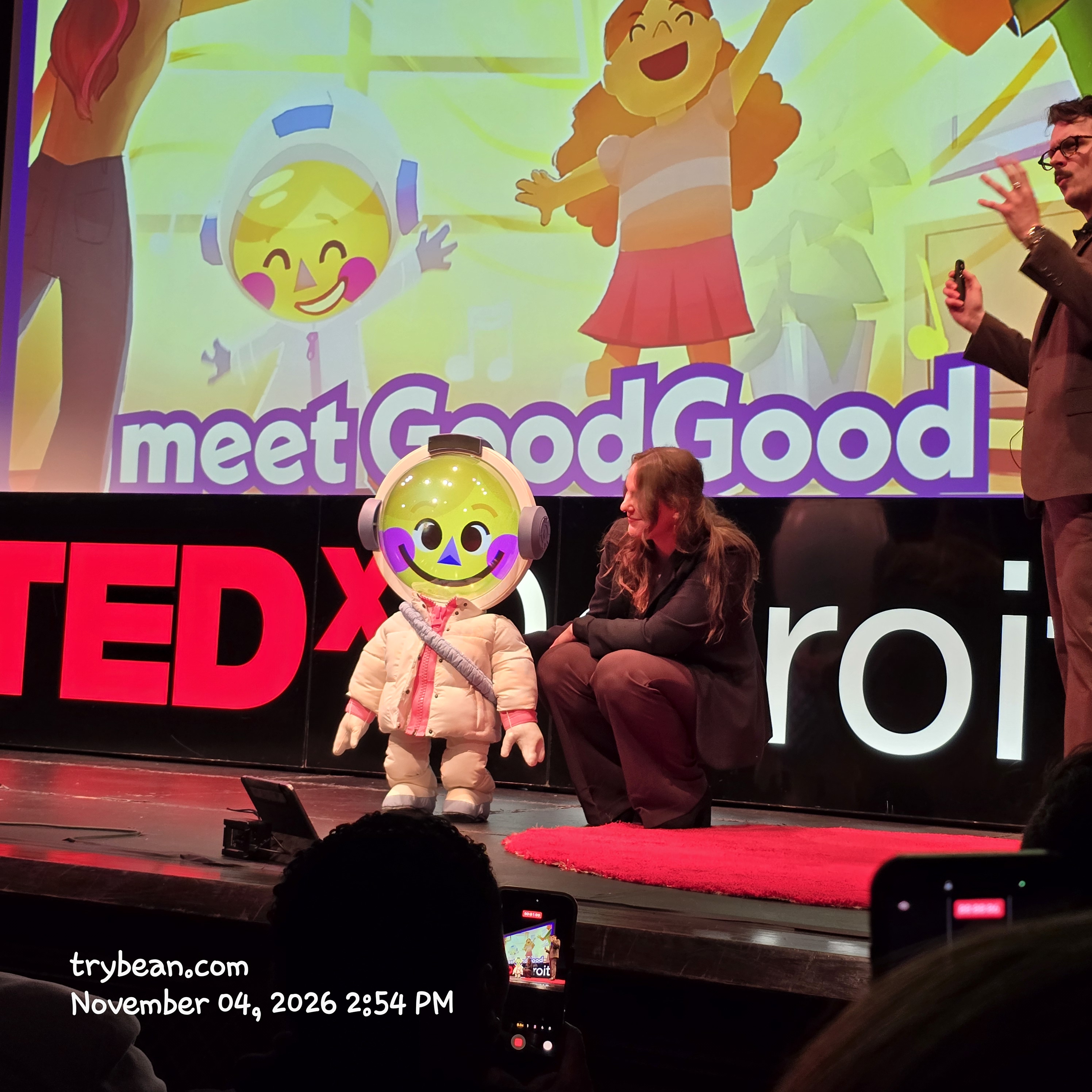
Are you kidding me? You can’t get the parts, so you learn how to make the parts?
That’s American ingenuity and Detroit grit rolled into one. And yes, GoodGood kind of stole the show. Definitely look for video of GoodGood doing their good good thing ;-)
Kylee Phillips came up next, sharing some of her story and her music. One of the realities of helping produce an event is that sometimes you get called away just when you want to stay put. That happened during Kylee’s set, and I missed much more of it than I wanted to.
If you caught her full performance, I’d love to hear what stayed with you. Help fill in the part of the afternoon I missed.
Yugal Kishore Das brought a different kind of energy to the stage: calm.
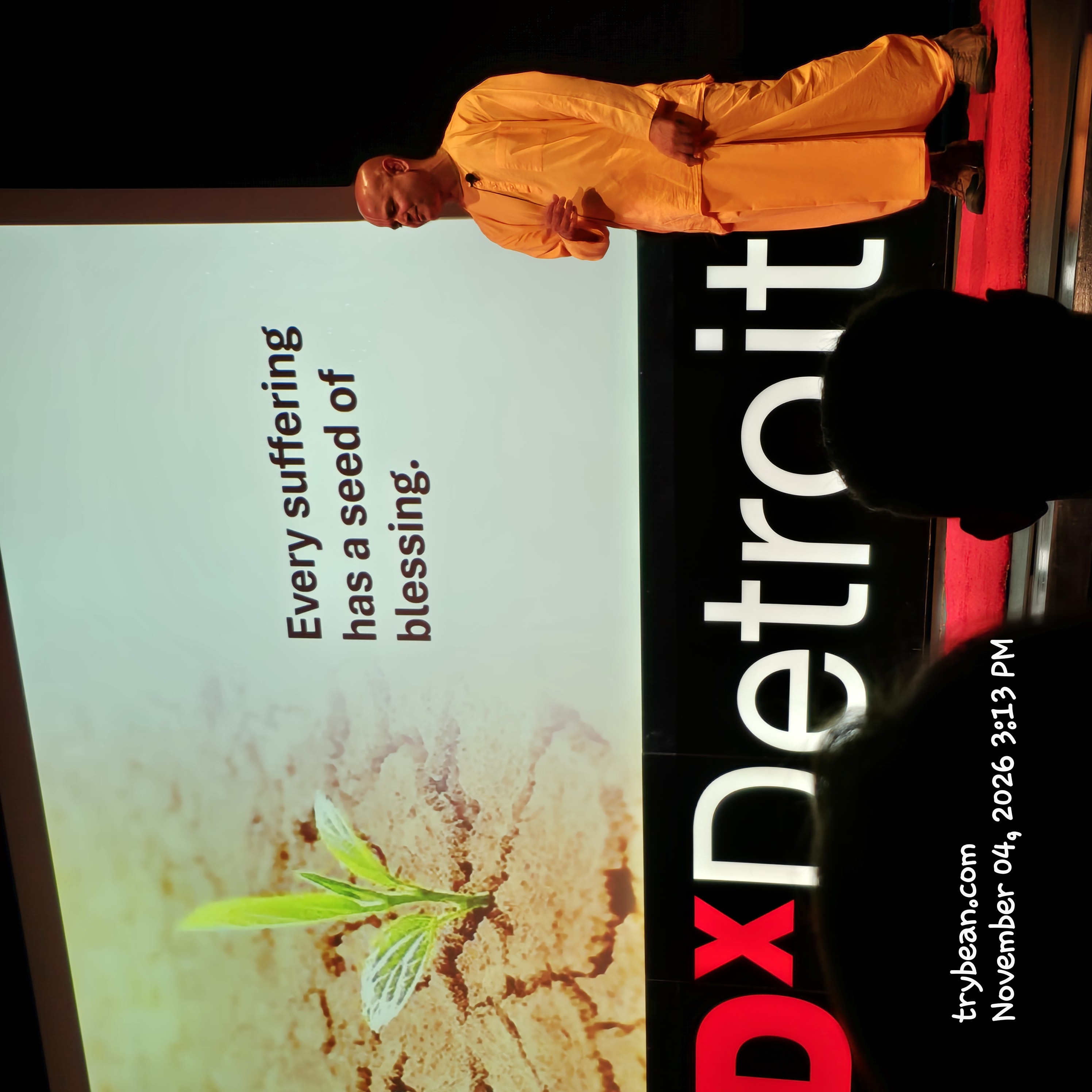
A former IT professional who became a monk, Yugal shared insights from decades of practice and helping people navigate stress, anger, and the demands of daily life. His message reinforced something I’ve believed for a long time: it starts within.
The way we move through the world has a lot to do with what’s happening inside us. There was something fitting about making room for that reminder in the middle of such a full afternoon.
Bill Bushart introduced himself as a comedian who travels around the country while somehow remaining a secret. Which is funny, considering how many aspiring comics he’s helped through his coaching at Mark Ridley’s Comedy Castle in Royal Oak.
Bill talked about why people get into comedy and what helping them find their voice has taught him. He also had a very human moment right in the middle of his talk: he lost his place.
I want to come back to what happened next, because it became part of how we closed the day.
Rish Mitra challenged men to be loudly good.
That means speaking up when we encounter misogyny, supporting one another, and building the language to express what we’re actually feeling. He challenged the familiar instruction to “man up” and asked us to consider what our responses teach men about whether it’s safe to be vulnerable.
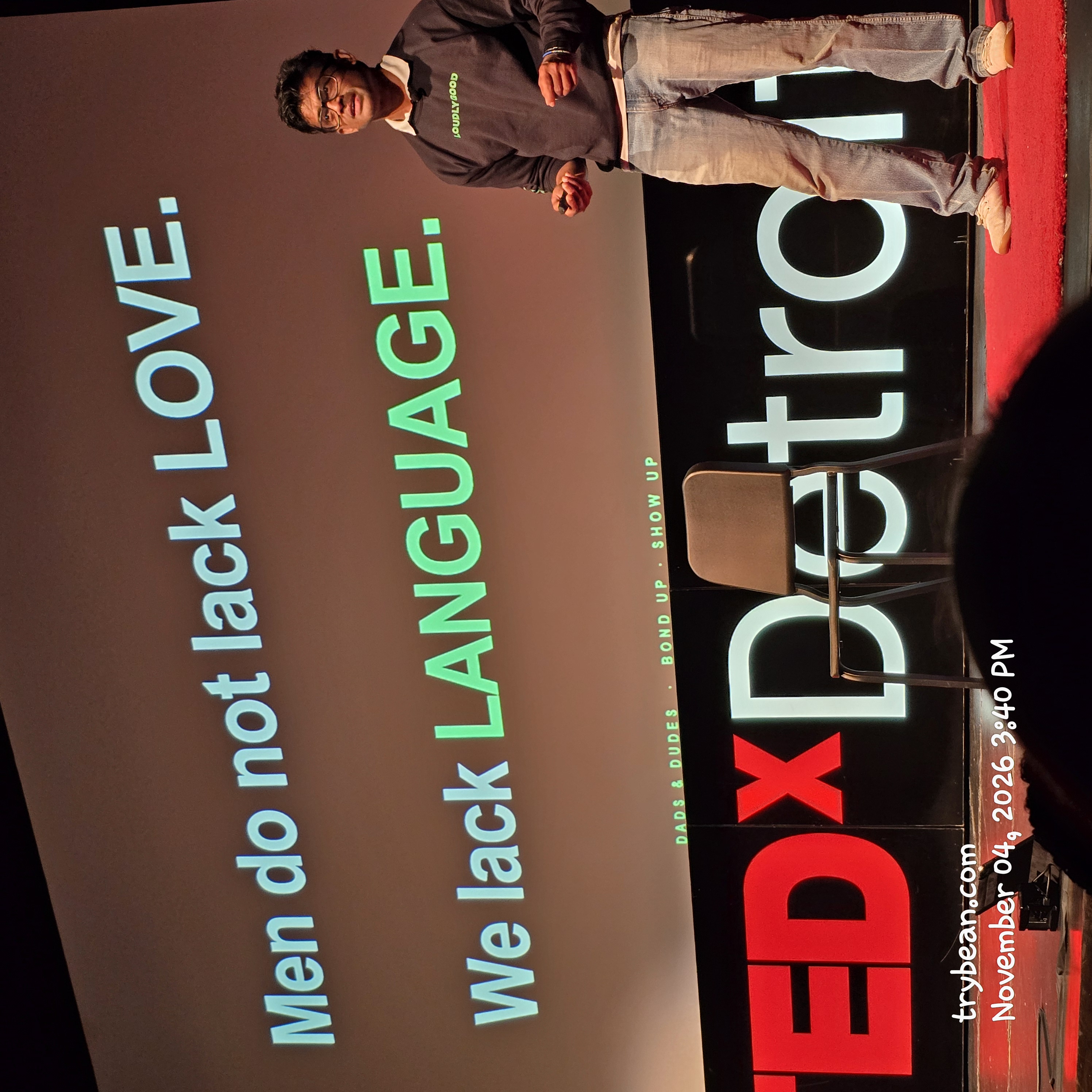
He also asked women to support that vulnerability when it shows up. If we want more emotional honesty, we have to make room for it.
When Rish brought his son out at the end, the message became especially personal. The way we show up now helps shape the men the next generation will become.
Then Christy McDonald took the stage.
Christy shared the loss of her husband to cancer, the way grief upended her life, and the process of finding her way forward with three children. Part of that journey eventually included taking to the sky together, an experience that stayed with me as she described it.
Her talk was raw. Real. And delivered so beautifully.
Personally, this became an instant all-time favorite TEDx talk. Some talks give you an idea to think about. Christy’s gave me something I could feel, and I’m still carrying it.
Mr. E in the D (Emmanuel Smith) joined Charlie to introduce Justin Ward, a 17-year-old Detroit puppeteer with a remarkable story.
At seven, Justin watched a documentary about Jim Henson and decided he wanted to make puppets. So he made one. Ten years later, he has his own educational children’s show.
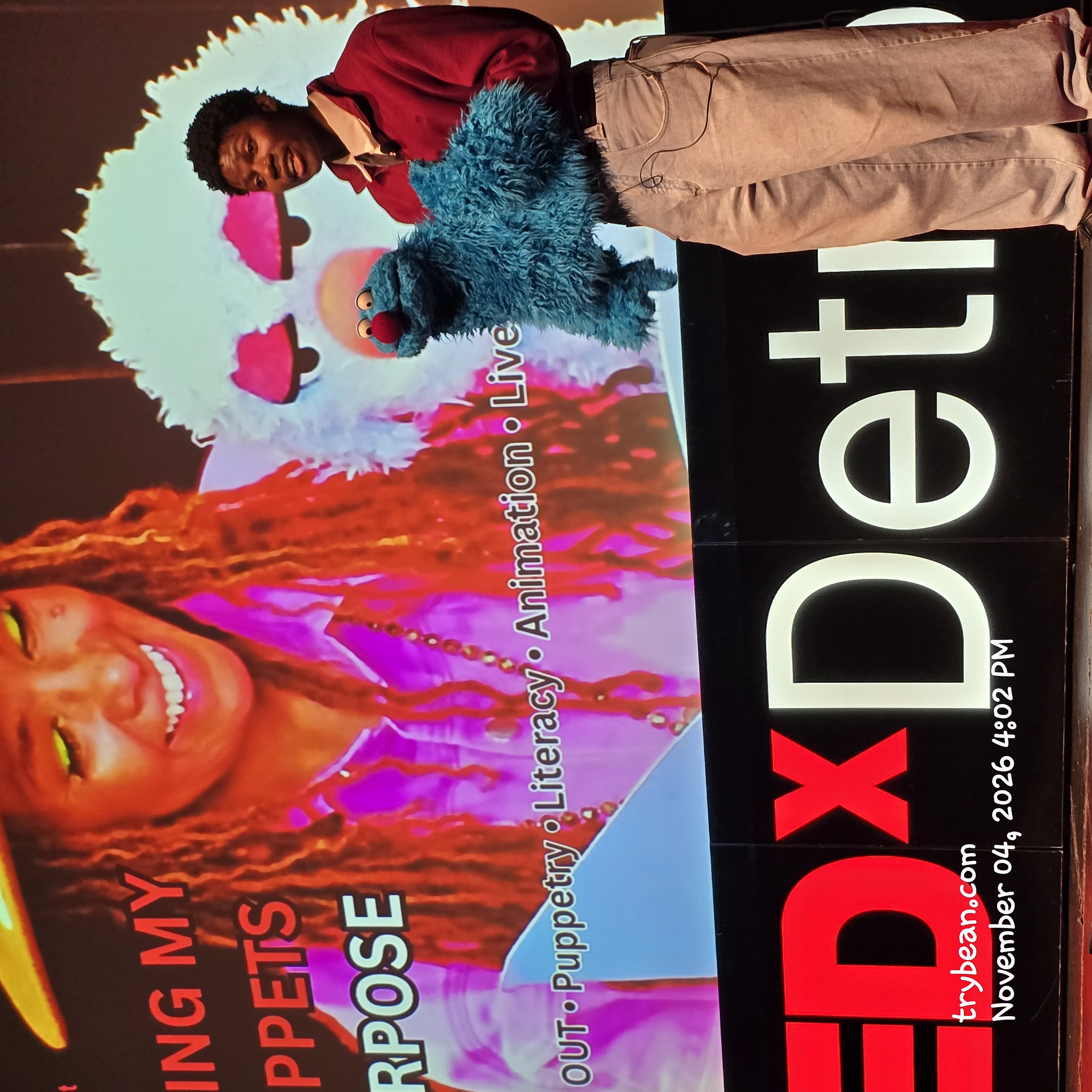
The idea I took from Justin was to follow your passion and figure out how to use it to add value to the world. This young man is already doing that. He’s going to keep lighting up rooms for a long time.
The Detroit Youth Choir followed with a medley I experienced from the wings. Even backstage, I could hear the voices and see the movement coming together. It was a treat to have their energy on that stage.
Judson Anderson delivered the final talk of the day. A few minutes into his story came the reveal: the person we thought he was describing was him.
I was backstage preparing to close the event, so I couldn’t give Judson’s full talk the attention it deserved. That reveal caught me, though, and his is another talk I want to revisit when I can give it my full focus.
Then it was my turn to send everyone home.
I brought us back to Bill’s moment onstage.
When he lost his place, the audience started clapping. People called out encouragement. “You got this!” They wanted him to know they were with him.
Think about that. One of the great fears people have about public speaking is that they’ll go blank and the room will turn on them. In that room, the response was support. People saw someone having a difficult moment and wanted to help him through it.
I asked the audience to carry that spirit beyond Marygrove. To be those people for someone else. To bring that level of support into the moments we find ourselves in every day.
To choose curiosity over certainty. To choose hope. And ultimately, to choose love.
That was TEDxDetroit 2026.
To everyone who took the stage, filled a seat, volunteered, supported us, or helped bring this day to life: thank you. Eighteen events in, I’m grateful we still get to do this together.
Were you there? Tell me which idea, performance, or moment you’re still carrying.

Office: Wherever I am
Call 248-224-1326
Email:bean@trybean.com
Site: www.trybean.com

Copyright 2026 . All rights reserved


